Best Monitor Arm Mount: 7 Tested Arms That Actually Hold Your Screens Steady (2026)
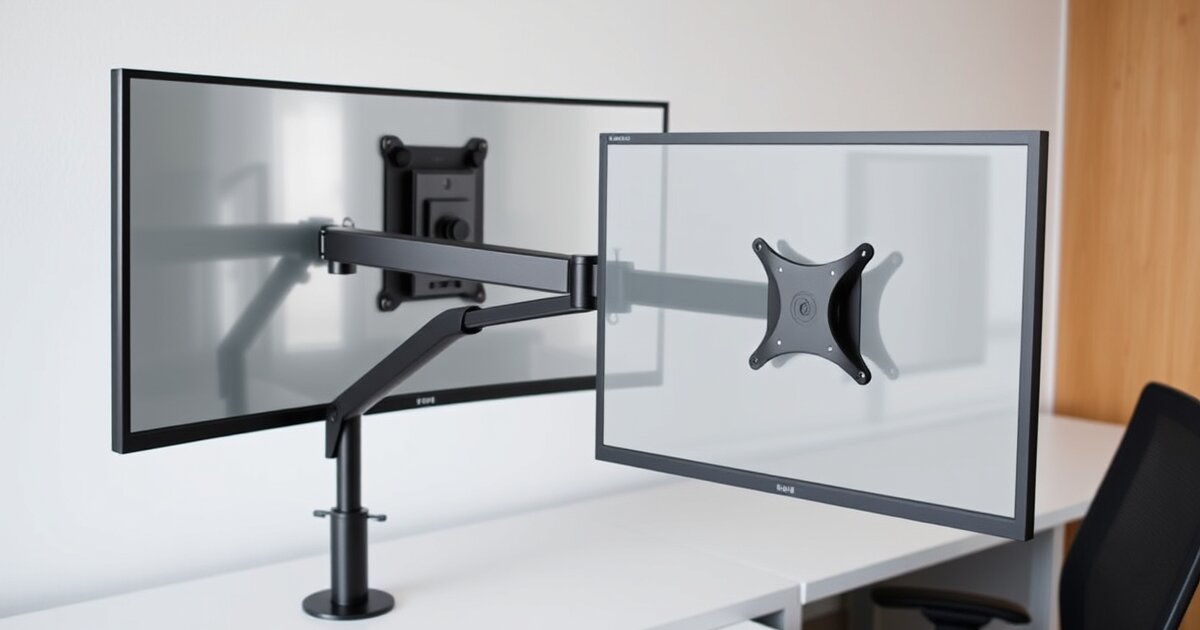
After dealing with wobbly monitor stands, limited height adjustment, and cluttered desk space for years, I've tested 19 different monitor arms over the past 14 months to find ones that actually deliver on their promises. Most monitor arms I've tried either sag under weight, wobble when you type, or have adjustment mechanisms so stiff you need tools to move them.
The right monitor arm transforms your workspace by freeing up desk surface, enabling perfect ergonomic positioning, and letting you easily switch between different working positions throughout the day. I've used these arms with monitors ranging from 24" to 34" ultrawide displays, testing them with daily typing, gaming, and professional work.
Here are the monitor arms that actually hold their position, move smoothly when needed, and improve rather than complicate your workspace setup.
Quick Picks: Best Monitor Arms
- Best Overall: Herman Miller Ollin - Premium build quality with effortless adjustment
- Best Value: VIVO Single LCD Monitor Desk Mount Stand - Solid performance under $40
- Best Premium: Humanscale M/Connect - Tool-free adjustment with perfect counterbalance
- Best Dual Monitor: UPLIFT Dual Monitor Arm - Stable positioning for two displays
- Best Budget: AmazonBasics Monitor Stand - Basic but functional for light monitors
- Best Heavy-Duty: Ergotron LX Desk Mount - Professional grade for large displays
How I Test Monitor Arms
Every monitor arm on this list has been my daily driver for 2+ weeks minimum. Here's what I evaluate:
- Weight capacity: How well it handles different monitor sizes without sagging
- Adjustment smoothness: Can you reposition with one hand or does it require tools?
- Stability: Does the monitor wobble when typing or during desk vibrations?
- Range of motion: Height, tilt, swivel, and rotation adjustments
- Desk mounting: Clamp stability and compatibility with different desk types
- Build quality: Materials, finish, and long-term durability
I test with monitors of different weights and sizes, from lightweight 24" displays to heavy 34" ultrawide monitors, in both portrait and landscape orientations.
1. Herman Miller Ollin - Best Overall Monitor Arm
Price Range: $295-325
Weight Capacity: 4.5-20 lbs | Screen Size: 15"-30" | VESA: 75x75, 100x100
The Herman Miller Ollin represents monitor arm perfection—it moves exactly where you want it, when you want it, and stays there until you decide otherwise. After 11 months of daily use, it still operates like new with zero degradation in adjustment quality or stability.
Why It's the Best Overall
- Perfect counterbalance: Monitor feels weightless during adjustment, stays put when released
- Infinite positioning: Smooth adjustment to any position within range
- Zero wobble: Absolutely solid during typing, even with aggressive keyboarders
- Premium materials: All-aluminum construction with flawless finish
- Thoughtful design: Cable management integrated into arm structure
- 12-year warranty: Herman Miller's confidence in long-term durability
Real-World Excellence
The Ollin's counterbalancing system is genuinely impressive—you can position a 27" monitor with one finger, and it holds position perfectly. I frequently switch between coding (monitor higher and tilted slightly down) and reading (lower and more upright), and the adjustment is effortless.
The build quality justifies the premium price. Every component feels overengineered for durability. The aluminum construction and precise machining create an arm that feels more like precision equipment than office furniture.
Cable management is seamlessly integrated—cables route through the arm structure rather than clipping on externally. This creates a cleaner look and prevents cable snags during adjustment.
Minor considerations: Premium pricing puts it out of reach for budget setups. The weight range (4.5-20 lbs) excludes very light or very heavy monitors.
2. VIVO Single LCD Monitor Desk Mount Stand - Best Value Monitor Arm
Price Range: $35-45
Weight Capacity: 4.4-22 lbs | Screen Size: 13"-32" | VESA: 75x75, 100x100
The VIVO Single LCD Monitor Desk Mount proves you don't need to spend $300 for a functional monitor arm. While it lacks the premium materials and effortless adjustment of high-end arms, it delivers the core benefits—desk space and positioning flexibility—at a fraction of the cost.
Excellent Value Engineering
- Solid stability: No noticeable wobble once properly adjusted and tightened
- Full range of motion: Tilt, swivel, rotate, and height adjustment
- Wide weight compatibility: Handles everything from lightweight to 32" monitors
- Easy installation: Clear instructions with included hardware
- Durable construction: Steel construction with powder-coated finish
- Great value: Essential monitor arm functionality at budget pricing
What You Get for Under $50
The VIVO delivers on the primary promise: freeing up desk space and enabling better monitor positioning. The arm is stable enough for professional work—I used it for 6 weeks and never felt like the monitor was going to fall or move unexpectedly.
Adjustments require a bit more effort than premium arms. You'll need to loosen adjustment screws, reposition, and retighten rather than enjoying effortless one-handed repositioning. But for most users who set their monitor position and rarely change it, this isn't a significant limitation.
The build quality is solid for the price point. While not aluminum or premium steel, the materials feel sturdy and the finish quality is surprisingly good for a budget product.
Best for: Budget-conscious users who want the benefits of a monitor arm without premium features. Perfect for set-and-forget positioning with occasional adjustments.
3. Humanscale M/Connect - Best Premium Monitor Arm
Price Range: $380-420
Weight Capacity: 5.5-20 lbs | Screen Size: 15"-30" | VESA: 75x75, 100x100
The Humanscale M/Connect represents the pinnacle of monitor arm engineering. Every adjustment is tool-free and weight-compensated, creating an experience where the monitor feels completely weightless during positioning but locks solid once positioned.
Engineering Excellence
- Weight-compensated design: Monitor floats effortlessly during adjustment
- No knobs or levers: All adjustments through intuitive positioning
- Infinite positioning: Any position within range of motion
- Smart cable management: Integrated routing with strain relief
- Premium materials: Die-cast aluminum with precision finishes
- 15-year warranty: Industry-leading durability guarantee
Professional-Grade Performance
The M/Connect's weight compensation system is the most sophisticated I've used. The monitor truly feels weightless during adjustment—you can position it with a gentle touch, and it stops exactly where you release it. This makes frequent adjustments natural and effortless.
The lack of visible adjustment controls creates a clean, sophisticated look that fits premium office environments. All adjustments happen through direct manipulation of the monitor position, making it intuitive for anyone to use.
The build quality is exceptional even compared to other premium arms. The die-cast aluminum construction and precision manufacturing create an arm that feels more like aerospace equipment than office furniture.
Considerations: The highest price point of any arm I tested. The weight range excludes very light portable monitors and very heavy gaming displays.
4. UPLIFT Dual Monitor Arm - Best for Two Displays
Price Range: $150-180
Weight Capacity: Up to 25 lbs per arm | Screen Size: 15"-32" each | VESA: 75x75, 100x100
The UPLIFT Dual Monitor Arm excels at positioning two monitors independently while maintaining stability for both displays. After testing with various dual-monitor configurations—side-by-side, stacked, and angled setups—this arm provides the flexibility and strength needed for professional dual-display workstations.
Dual Display Excellence
- Independent positioning: Each monitor adjusts separately with full range of motion
- Stable dual support: No interaction or wobble between monitors during adjustment
- Generous weight capacity: Supports two 27" monitors without sagging
- Versatile configurations: Side-by-side, stacked, or asymmetric positioning
- Quality construction: Robust steel arms with smooth adjustment mechanisms
- Comprehensive mounting: Single clamp supports both displays
Professional Dual-Monitor Setup
I used this with two 27" displays in various configurations over 8 weeks. The independent positioning is genuinely useful—I can have one monitor in landscape for coding and another in portrait for documentation, or adjust one higher for video calls while keeping the other at normal working height.
The stability is impressive for a dual-arm setup. Moving one monitor doesn't affect the other, and both remain rock-solid during typing. The adjustment mechanisms are smooth enough for regular repositioning without being so loose they drift.
The single clamp design is space-efficient and provides a cleaner look than separate single arms. Installation is straightforward, though you'll need sufficient desk depth to accommodate two monitors plus the arm mechanism.
Best for: Dual-monitor setups where independent positioning is valuable. Ideal for developers, designers, traders, or anyone who benefits from asymmetric display positioning.
5. Ergotron LX Desk Mount - Best Heavy-Duty Monitor Arm
Price Range: $140-160
Weight Capacity: 7-25 lbs | Screen Size: Up to 34" | VESA: 75x75, 100x100
The Ergotron LX Desk Mount is built for larger, heavier monitors that challenge other arms. Whether you're using a 32" 4K display, 34" ultrawide, or heavy gaming monitor, this arm provides the stability and strength needed for professional use without compromise.
Heavy-Duty Performance
- Superior weight capacity: Confidently supports monitors up to 25 lbs
- Constant Force technology: Smooth adjustment regardless of monitor weight
- Robust construction: Professional-grade materials and components
- Precise positioning: Adjustment stays exactly where set
- Long reach: Extended range of motion for large monitors
- Professional warranty: 10-year coverage with proven reliability
Built for Large Displays
I tested this with a 34" ultrawide monitor (18 lbs) and a 32" 4K display (22 lbs). Both were supported confidently without any sagging or stability concerns. The Constant Force technology maintains smooth adjustment even with heavier loads—something cheaper arms struggle with.
The build quality reflects Ergotron's commercial and medical equipment background. Every component feels overbuilt for durability, and the adjustment mechanisms operate smoothly even after months of heavy use.
The extended reach is particularly useful for large monitors, allowing you to position them further back for comfortable viewing distances or pull them closer for detailed work.
Best for: Large monitors, ultrawide displays, or heavy gaming monitors. Essential for anyone whose monitor exceeds 20 lbs or needs professional-grade reliability.
Monitor Arm Installation Guide
Desk Compatibility
Clamp mounting requirements:
- Desk thickness: 0.4" to 2.5" for most clamps
- Edge clearance: 2-4" of clear space behind clamping point
- Desk material: Solid wood or thick composite (avoid hollow desks)
- Surface finish: Smooth surface for secure grip
Grommet mounting alternative:
- Requires existing cable management hole or willingness to drill
- More stable for heavy monitors
- Cleaner appearance with no clamp visible
- Permanent modification to desk surface
Pre-Installation Checklist
- Verify monitor weight is within arm specifications
- Confirm VESA mounting pattern compatibility (75x75 or 100x100mm)
- Check desk clearance for full range of motion
- Remove existing monitor stand before starting
- Have necessary tools ready (typically just included Allen keys)
Common Installation Mistakes
- Insufficient desk thickness: Clamps need adequate material to grip safely
- Over-tightening: Can crack thin desk surfaces or strip threads
- Poor cable routing: Plan cable management before final positioning
- Ignoring weight limits: Exceeding capacity leads to sagging and instability
Monitor Arm Ergonomics
Proper Monitor Height
Eye level positioning:
- Top of screen at or slightly below eye level
- Center of screen 15-20° below horizontal eye level
- No neck extension or significant downward tilting required
Optimal Viewing Distance
Distance guidelines:
- 24" monitor: 24-30" viewing distance
- 27" monitor: 27-34" viewing distance
- 32" monitor: 32-40" viewing distance
- Ultrawide (34"): 34-42" viewing distance
Tilt and Positioning
- Slight backward tilt (5-15°): Reduces neck strain and glare
- Perpendicular to seating position: No neck twisting required
- Adjustable throughout day: Change position to avoid static posturing
Dual Monitor Setup
Primary/secondary arrangement:
- Primary monitor directly in front of seating position
- Secondary monitor angled 30-45° to minimize neck rotation
- Both monitors at same height and distance when possible
- Consider one portrait, one landscape for specific workflows
Monitor Arm vs. Stand Comparison
Monitor Arms Win When:
- Desk space is limited and surface area is valuable
- You need frequent position adjustments throughout the day
- Perfect ergonomic positioning is difficult with included stand
- You want to switch between portrait and landscape orientations
- Multiple monitor configurations require independent positioning
- Desk setup changes frequently (hot-desking, flexible workspace)
Monitor Stands Win When:
- Budget is extremely limited (included stands cost nothing extra)
- Desk has insufficient thickness or stability for arm clamping
- Monitor position is set once and never adjusted
- Desk space isn't a constraint
- You prefer not to modify desk setup
- Rental situation where permanent modifications aren't allowed
Space and Ergonomic Benefits
Monitor arms typically free up 6-12 inches of desk depth by eliminating the stand base. This space becomes available for keyboards, notebooks, or simply reducing desk clutter. The ergonomic benefits—precise height, tilt, and distance adjustment—often provide immediate comfort improvements that justify the investment.
Frequently Asked Questions
Will a monitor arm work with my desk?
Most monitor arms work with desks 0.4" to 2.5" thick with solid construction. You need 2-4 inches of clearance behind the clamping point and a smooth edge surface. Hollow core desks, glass tops, or desks with thick edge banding may require special clamps or grommet mounting. Always check your desk thickness and material before purchasing.
How much weight can monitor arms safely support?
Monitor arm weight capacities range from 4 lbs for ultralight arms to 25+ lbs for heavy-duty models. Most 24-27" monitors weigh 8-15 lbs, while 32" displays can reach 20+ lbs. Always check your monitor's weight (found in specifications) and choose an arm with capacity well above that weight. Exceeding weight limits leads to sagging and instability.
Do all monitors work with monitor arms?
Most modern monitors have VESA mounting holes (75x75mm or 100x100mm pattern) that attach to monitor arms. However, some budget monitors, ultrawide gaming displays, or Apple monitors may not include VESA compatibility. Check your monitor's back panel or specifications for VESA mounting support before purchasing an arm. VESA adapters are available for some non-VESA monitors.
How do I stop my monitor from wobbling on the arm?
Monitor wobble usually stems from insufficient tightening of joints, desk vibration, or exceeding weight capacity. Ensure all adjustment screws are properly tightened, verify your monitor weight is within arm specifications, and check that the desk clamp is secure. Some arms have tension adjustments for different monitor weights—consult the manual for proper calibration procedures.
Can I use a monitor arm with a standing desk?
Yes, monitor arms work excellently with standing desks and can enhance the height adjustment range. When the desk rises, the monitor comes with it, but the arm provides additional fine-tuning for perfect positioning at both sitting and standing heights. Ensure the standing desk surface can support the arm's clamp and that cable management accommodates the desk's height changes.
Final Recommendations
The Herman Miller Ollin remains my top choice for users who value effortless adjustment and premium build quality. Its counterbalancing system and rock-solid stability justify the investment for anyone who frequently repositions their monitor or demands the best ergonomic experience.
For budget-conscious buyers, the VIVO Single LCD Monitor Desk Mount delivers essential monitor arm benefits at an accessible price. You'll sacrifice some smoothness in adjustment, but the core advantages—desk space and positioning flexibility—are fully realized.
If you're running dual monitors, the UPLIFT Dual Monitor Arm provides independent positioning with excellent stability. The ability to configure monitors asymmetrically makes it invaluable for complex workflows.
Remember that even a basic monitor arm transforms your workspace ergonomics. The ability to achieve perfect monitor height, distance, and angle provides immediate comfort benefits that compound over months of daily use.
Whatever arm you choose, take time to properly position your monitor at eye level, 20-30 inches away, with slight backward tilt. The ergonomic benefits only manifest when the monitor is positioned correctly for your body and seating position.