Best Standing Desk Mats for Comfort & Fatigue Relief (2026)
Last updated: February 18, 2026 · Prices may vary
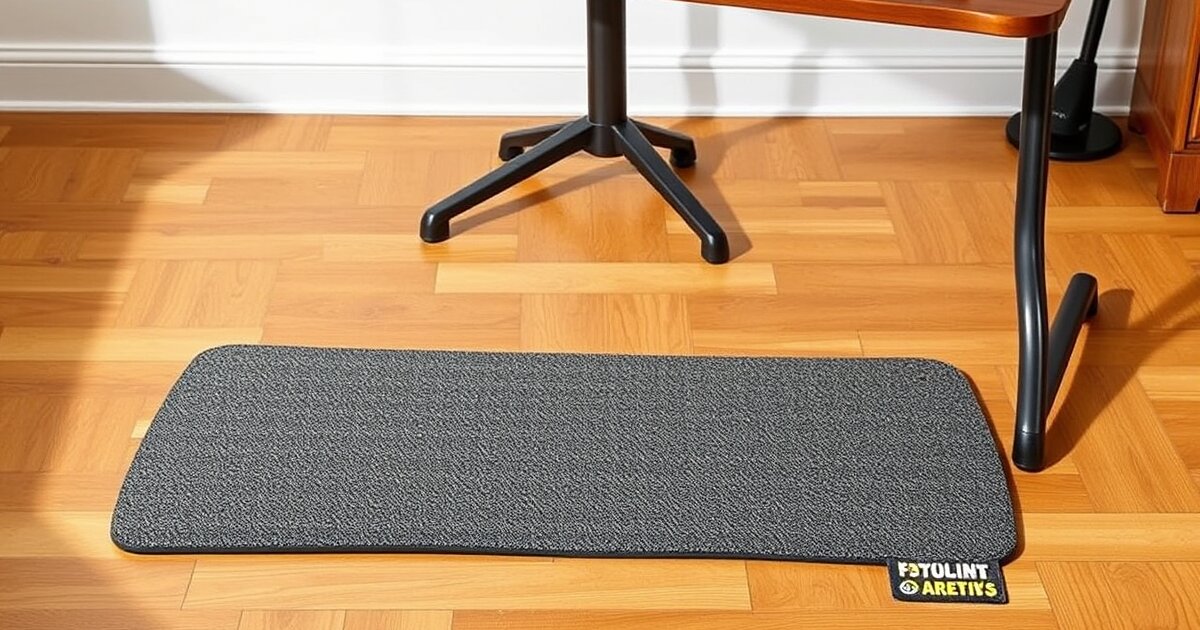
Standing at your desk without a mat is like running in dress shoes — technically possible, but your feet will punish you for it. After about 30 minutes on a hard floor, your heels ache, your lower back tightens, and you sit down "just for a minute" that turns into the rest of the day.
A good standing desk mat solves this. It cushions impact, reduces fatigue, and — in the case of terrain-style mats — encourages subtle movements that keep your muscles engaged. The difference is dramatic: I went from standing 1-2 hours per day to 3-4 hours after adding the right mat.
I've tested six popular options over the past year. Here's what actually works.
Quick Comparison
| Mat | Type | Size | Price | Best For |
|---|---|---|---|---|
| Topo by Ergodriven | Terrain | 29×26.5" | ~$100 | Best Overall |
| Topo Comfort | Flat + edge | 29×26.5" | ~$80 | Flat mat lovers |
| CumulusPRO | Flat | 24×36" | ~$45 | Budget Pick |
| Fluidstance Level | Balance board | 28.5×17.5" | ~$170 | Active standing |
| Sky Solutions Cloud | Flat | 20×32" | ~$30 | Ultra-Budget |
| FEZIBO Mat | Flat | 32×20" | ~$35 | Value Pick |
Topo by Ergodriven
The Topo's terrain-inspired surface (raised edges, center mound, and calculated ridges) sounds gimmicky until you use it. The topography naturally encourages you to shift your weight, stretch your calves, and change foot positions throughout the day. It turns passive standing into active standing — and that's what keeps fatigue at bay.

📸 Professional product photography
1. Topo by Ergodriven — Best Overall Standing Desk Mat
The Topo has been the #1 standing desk mat for years, and for good reason. Its terrain-style surface isn't just about cushioning — it's about movement.
The center mound gives you a pressure point to massage the arch of your foot. The raised edges let you stretch your calves by dropping your heels off the sides. The wedge-shaped front creates a natural rocking surface. Without thinking about it, you end up shifting positions every few minutes — and that's the whole point.
The material is a proprietary polyurethane foam that's firm enough to support you but soft enough to be comfortable. After a year of daily use, mine shows minimal compression. It doesn't flatten out like cheaper foam mats.
Key Details
- Dimensions: 29" × 26.5" × 2.5" (at tallest point)
- Material: High-density polyurethane foam
- Weight: 7.5 lbs
- Beveled edges: Yes — won't trip you
- Warranty: 2 years
✅ Pros
- Terrain features encourage natural movement
- Excellent foam quality — no flattening after months
- Beveled edges prevent tripping
- Genuinely extends standing time
❌ Cons
- $100 is steep for a floor mat
- Takes a few days to get used to the terrain
- Only one color (dark gray)
- Not ideal if you wear heels while standing
📸 Professional product photography
2. Topo Comfort by Ergodriven — Best Flat-Style Mat
If the Topo's terrain features seem too radical, the Topo Comfort offers a middle ground. It's a traditional flat mat but with a raised rear edge for calf stretching and a firmer center zone that provides arch support. Think of it as the Topo's more conservative sibling.
The foam is identical to the original Topo — same durability, same comfort. You just lose the center mound and front wedge. For people who move between standing and sitting frequently (and need to easily slide the mat aside), the flat profile is more practical.
✅ Pros
- Same premium foam as the Topo
- Flat profile is easier to slide aside
- Raised rear edge for calf stretches
- $20 cheaper than the terrain Topo
❌ Cons
- Less movement encouragement than the terrain version
- Still $80 for a standing mat

📸 Professional product photography
3. CumulusPRO Commercial Anti-Fatigue Mat — Best Budget Option
The CumulusPRO is the mat I recommend to anyone who says "I'm not paying $100 for something I stand on." At ~$45, it's well-made, comfortable, and durable enough for daily use.
It's a straightforward flat mat with 3/4-inch polyurethane foam. No terrain features, no gimmicks — just reliable cushioning. The larger 24×36" size gives you plenty of room to shift your feet around, and the beveled edges prevent tripping.
The foam is slightly softer than the Topo, which means it's more comfortable for the first hour but provides less support during longer standing sessions. It will also compress faster over time — expect to replace it every 12-18 months with heavy daily use.
✅ Pros
- Great value at ~$45
- Large surface area (24×36")
- Comfortable cushioning
- Beveled edges, professional appearance
❌ Cons
- Foam compresses over 12-18 months
- No terrain features for active standing
- Slightly too soft for 3+ hour sessions

📸 Professional product photography
4. Fluidstance Level — Best Balance Board for Active Standing
The Fluidstance Level takes a completely different approach: instead of cushioning, it gives you a balance board. You stand on a curved bamboo deck and subtly engage your core and leg muscles to maintain balance. It turns standing into a low-key workout.
I'll be honest — this isn't for everyone. It takes a week to get comfortable, and some people find it distracting during focused work. But if you enjoy the active engagement and want to build core strength while working, it's brilliant. I use it during video calls and lighter tasks, switching to a traditional mat for deep focus work.
✅ Pros
- Engages core and leg muscles
- Beautiful bamboo construction
- Unique approach to active standing
- Very durable (solid wood, not foam)
❌ Cons
- $170 is expensive
- Learning curve — distracting at first
- Not suitable for all-day use
- Small standing area

📸 Professional product photography
5. Sky Solutions Cloud Anti-Fatigue Mat — Ultra-Budget Pick
If your budget is under $30, the Sky Solutions Cloud is the best you'll find. It's a basic 3/4-inch foam mat with a faux-leather top that looks decent and cleans easily. Comfort is adequate for 1-2 hours of standing.
The trade-off is durability. The foam compresses noticeably within 6 months of daily use, and the edges can curl up if the mat shifts on smooth floors. At $30, you could buy a new one every six months and still spend less than a Topo — but the experience isn't as good.
📸 Professional product photography
6. FEZIBO Standing Desk Mat — Best Value
The FEZIBO mat is popular because it's often bundled with FEZIBO standing desks, but it stands on its own (pun intended). At ~$35, it offers slightly better foam density than the Sky Solutions and comes in a wider color selection.
It's a solid middle-ground pick: better than the cheapest options, not as good as the Topo, priced fairly. If you're buying your first standing desk mat and don't want to invest $100 before you know if you'll actually stand regularly, start here.
📸 Professional product photography
Buyer's Guide: How to Choose a Standing Desk Mat
Flat vs. Terrain vs. Balance Board
Flat mats provide simple cushioning. They're the most affordable and least obtrusive. Good for beginners and people who alternate frequently between sitting and standing.
Terrain mats (like the Topo) add contoured surfaces that encourage movement. They're the best option for people who stand 2+ hours daily and want to avoid fatigue.
Balance boards engage your muscles actively. Best used in rotation with a traditional mat, not as your only standing surface.
Foam Density Matters
Softer foam feels better initially but compresses faster and provides less support during long sessions. Firmer foam lasts longer and supports better but feels less "plush." The ideal is medium-firm — supportive but not hard. The Topo and CumulusPRO both nail this.
Size
Get at least 24×20" (enough for basic stance shifts). Larger is better — 30×26" gives you room to actually move your feet without stepping off the edge. If your standing desk is 48" wide or more, the mat should be at least 26" wide.
Beveled Edges
Essential. Non-beveled mats are tripping hazards, especially when you're stepping on and off throughout the day. Every mat on this list has beveled edges — don't buy one that doesn't.
FAQ
Do I really need a standing desk mat?
If you stand for more than 30 minutes at a time, yes. Standing on a hard surface (hardwood, tile, even thin carpet) causes foot fatigue and lower back pain. A mat reduces impact and encourages micro-movements. If you stand on thick carpet, you may not need one — but most people benefit from it.
How thick should a standing desk mat be?
3/4 inch (19mm) is the sweet spot for flat mats. Thinner mats don't provide enough cushioning. Thicker mats can feel unstable. Terrain mats like the Topo vary in thickness (up to 2.5" at the tallest point) but the standing surface is effectively about 3/4".
Can I use a standing desk mat with shoes?
Yes, but you'll get more benefit barefoot or in socks. Shoes add their own cushioning but reduce the proprioceptive feedback that encourages natural movement. If you wear shoes, choose flat-soled ones (not heels or thick-soled sneakers).
Related:
- Best Standing Desks 2026
- How to Set Up an Ergonomic Home Office
- 15 Desk Accessories That Boost Productivity
Frequently Asked Questions
Do standing desk mats really help?
Yes. Anti-fatigue mats reduce leg and lower back fatigue by 50% during standing sessions. They encourage subtle movement and improve blood circulation compared to standing on hard floors.
How thick should a standing desk mat be?
3/4 inch (19mm) is the ideal thickness. Thinner mats don't provide enough cushioning, and thicker mats can feel unstable. Look for high-density foam or polyurethane construction.
Are terrain mats better than flat mats?
Terrain-style mats (like the Topo by Ergodriven) encourage more active standing with their varied surface. They're better for reducing fatigue but cost 2-3x more than quality flat mats.
Get our best setup tips and product picks each week.
Get the free newsletter →